
Vertigo, Dizziness & Balance Disorder Testing

When testing is needed
Who will benefit from this evaluation
The comprehensive vestibular work-up is intended for individuals experiencing recurrent or persistent symptoms of vertigo, dizziness or unsteadiness — and in any case where the differential diagnosis requires distinguishing between a central and a peripheral cause.
Sudden vertigo episodes
A sense of spinning or movement of the surroundings, with or without nausea.
Chronic dizziness or unsteadiness
Light-headedness, blurred vision while moving, or persistent balance disturbance.
Falls or fall risk
Especially in older adults — objective quantification of unsteadiness.
Vision disturbances (moving image)
Oscillation or blurred image while walking (oscillopsia).
Pre- or post-operative assessment
Evaluation before or after inner-ear and posterior cranial fossa surgery.
Our approach
A complete diagnostic work-up in a single visit
Each patient undergoes a tailored combination of tests from our modern battery — vestibular testing, oculomotor analysis, otolith function testing, posturography and audiological assessment. The aim is twofold: to identify the actual cause of vertigo and to distinguish it as central or peripheral in origin with maximum precision.
Clinical interpretation of the results is performed by Professor Evangelos Anagnostou, specialised in Neuro-otology, so that every finding is correlated with the patient's complete neurological profile.
Our tests
Five state-of-the-art tests for a complete differential diagnosis
Each test focuses on a different functional pathway of the vestibular and audiological system. Their combined interpretation enables precise identification of the cause — from peripheral vestibular disorders to central syndromes.
vHIT — Video Head Impulse Test
Assessment of the semicircular canals & vestibular nerve
Evaluates the function of the semicircular canals and the vestibular nerve through the vestibulo-ocular reflex. Small, rapid head impulses are recorded with high-precision goggles, while eye movement is simultaneously monitored.
VOG — Binocular Video-Oculography
High-precision binocular eye-movement recording
Simultaneous high-sensitivity recording of both eyes' movements. Evaluates nystagmus and oculomotor disturbances, with precise measurement of saccades, smooth pursuit, optokinetic nystagmus and fixation disorders (square-wave jerks, ocular flutter).
cVEMPs — Cervical Vestibular Evoked Potentials
Functional assessment of the otolith system
Measures the function of the otolith balance system — the part of the inner ear responsible for the perception of gravity and linear acceleration. Acoustic stimuli elicit a reflex response from the sternocleidomastoid muscle, which is recorded with surface electrodes.
Posturography — Static & Dynamic Balance Assessment
Objective quantification of balance
Evaluates stability and balance control under different conditions — with eyes closed and open, on stable and unstable surfaces. Provides quantitative measurement and follow-up of the Romberg test and the vestibular Romberg over time.
Audiogram
Pure-tone audiological assessment
Measures hearing capacity across a range of frequencies and intensities, mapping the patient's audiological profile. It detects hearing loss and characterises its type (conductive, sensorineural, mixed).
Conditions we diagnose
Indicative clinical conditions & tests of choice
The selection of tests is personalised according to the clinical profile. Below are some of the most common conditions investigated with our battery:
Ménière's disease
Recurrent vertigo episodes combined with tinnitus and hearing loss. Requires a multi-parametric work-up — audiological, vestibular and imaging.
Vestibular neuritis
Sudden onset of severe vertigo lasting days, without auditory symptoms. Functional testing of the semicircular canals is diagnostic.
Parkinsonian syndromes (PSP)
Progressive supranuclear palsy presents with characteristic oculomotor disturbances. Precise recording allows early differentiation from Parkinson's disease.
Cerebellar ataxias
Disturbances of smooth pursuit, optokinetic nystagmus and balance reveal cerebellar dysfunction.
Superior canal dehiscence syndrome
A bony defect in the roof of the superior semicircular canal creates a "third window" causing vertigo and auditory symptoms triggered by sound stimuli.
Chronic unsteadiness & presbyastasis
Age-related unsteadiness and multifactorial chronic dizziness require objective quantification for targeted intervention and fall-risk assessment.
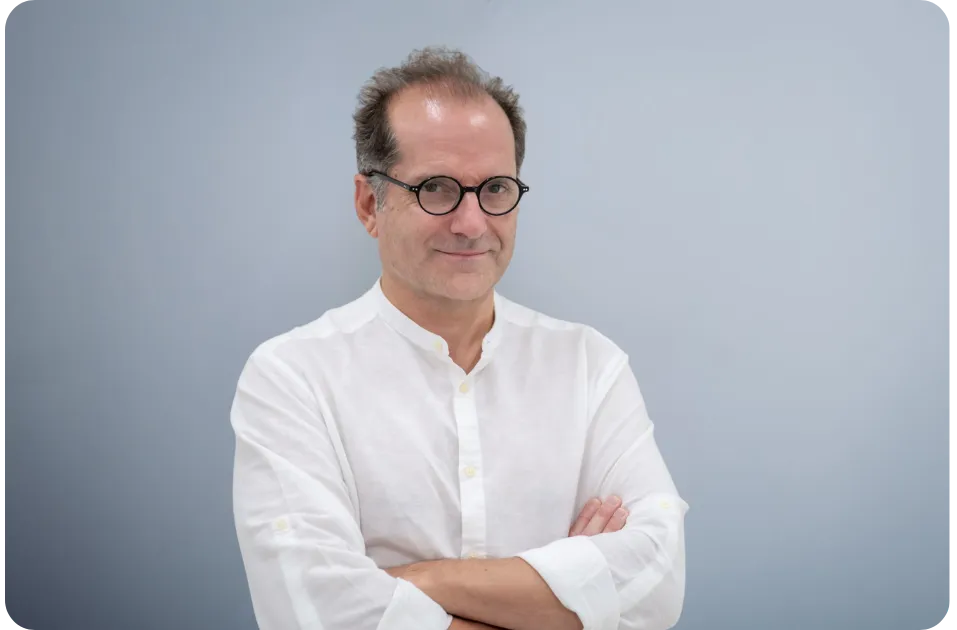
Medical Director, Vestibular Testing
Prof. Evangelos Anagnostou
Professor of Neurology — National and Kapodistrian University of Athens · Specialised in Neuro-otology
Scientific director of the Vestibular & Audiological Testing department at Affidea neuraCare, with international experience in the investigation of balance and oculomotor disorders. His clinical and academic activity focuses on inner-ear pathologies, neurodegenerative syndromes with vestibular manifestations, and the differential diagnosis of central versus peripheral vertigo.
View full profileFrequently Asked Questions
Before your appointment
The most common questions we receive from patients and referring physicians.